

Piloto Cubano, generally referred to as simply “Piloto” started its life in the Cuban Vuelta Abaja region of, ironically enough, Piloto. I find the simplistically logical way that tobacco, and cigar, terminology is manifested throughout it’s history a testament to the hardiness, down to earth, humble character that you often find in the family’s and farms that hold up the wonderful industry of these timeless, hand made, smokable, tubular pieces of art. But hey, that’s a tangent that would take us down many roads! Back on subject.. Piloto Cubano.
In the early 60s when communism, and the general societal collapse of Cuba drove many of these aforementioned family farms out of their homeland. Pioneers, known as Torcederos, of what we know today as simply “new world” cigars smuggled small, life filled seeds in coat pockets and small envelopes lined with cotton balls to their new island home of which the Dominican Republic sits. The island, split in 2/3rds, with 1/3rd being Hati to the west, is a sunny, tropical island washed by the Atlantic Ocean to the north and the warm waters of the Caribbean to the south. In the case of Piloto, we will focus mainly on one specific region of the Dominican Republic known as the Ciabo Valley. This swath of land stretches from the Bahia de Manzanillo (Manzanillo Bay) in the west, to the larger Samana Bay to the east. The mountain ranges of the Cordillera Septentrional and the rugged Cordillera Central bound the Cibao Valley on the north and south, respectively. It has two climate zones, split by the Yaque del Norte River. The drier western section has savanna-like vegetation, with patches of low, thorny bushes. To the east, a more tropical, fertile and humid zone named La Vega Real. Given its name by the renowned explorer, Christopher Columbus, La Vega Real is a tropical garden watered by the Yuna River, which is home to not only world-class tobacco farms, but also coffee, cacao, maize and rice.
Piloto Cubano tobacco is grown primarily in these two regions. Legendary farms such as Chateau de La Fuente and La Flor Dominicana’s La Canela farm call this land home. It has been said (as I have never been there myself) that the dirt here is “dark brown and has the consistency of wet clay on a potter’s wheel” which draws many mental images of fertile, well irrigated, tropical humid earth. In the words of Hendrik Kelner, owner of Tabacos Dominicanos S.A. (maker of Avo, Davidoff and others) “This soil is very special here; it’s perfect for growing Cuban-seed filler.” Often called the Yaque Valley, due to the Yaque River that runs through the region, is considered among experts the best place in the Dominican Republic to grow tobacco. Although over 500 miles apart, this region is the Dominican Republic’s Vuelta Abajo. It’s no wonder Piloto Cubano seeds found this new land home, embarking on its own story gathering new memories and nuances from the soil that felt like the motherland it was once forced to leave. Over generations of harvest, the Piloto Cubano has taken on its own Dominican identity, whether it is nestled near the foot of the northern mountain range, Cordillera Septentrional, or further south off the Yuna River at Chateau de La Fuente.
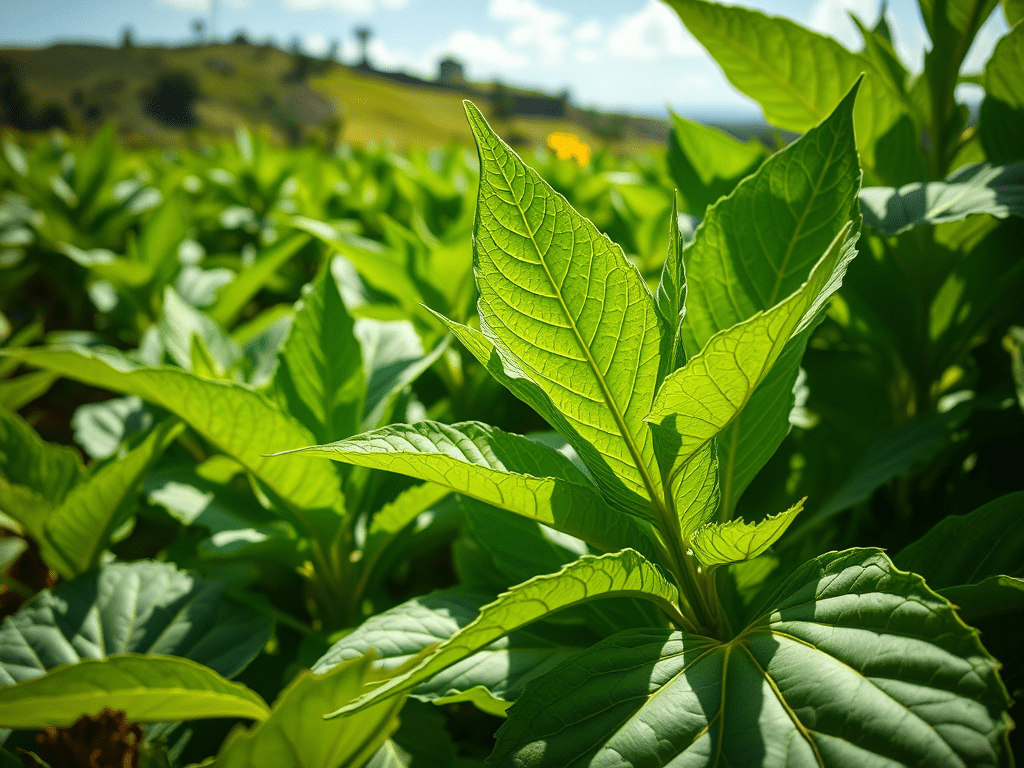
Gathering nutrients and tropical sunlight, sprouting from the dark earth, Piloto Cubano matures into 3-6ft tall plants beaming with sharp, intense, bold flavor that usually carry high nicotine content. While mostly used as filler tobaccos to enhance the taste of a blend, certain farms, such as Chateau de La Fuente, do grow wrapper leaf that hold notes of cinnamon, nuts and even light vanilla.
All said, Piloto Cubano tobacco, whether it be in the form of amplifying filler tobacco, or beautifully bold wrapper leaf, Piloto brings the character of a well-traveled protagonist in an adventurer’s tale to any cigar it is rolled within. From the early years of its life as a refugee, fleeing communism in the pockets of the Torcederos, to its world renown legacy it holds today, Piloto Cubano now gifts us tobacco that is the backbone of premier smoke we all now know as simply, Dominican.
 terrafuma
Leave a comment